
Local Expertise
Chimney Flashing and Christmas Lights: What We Check
October 27, 2026
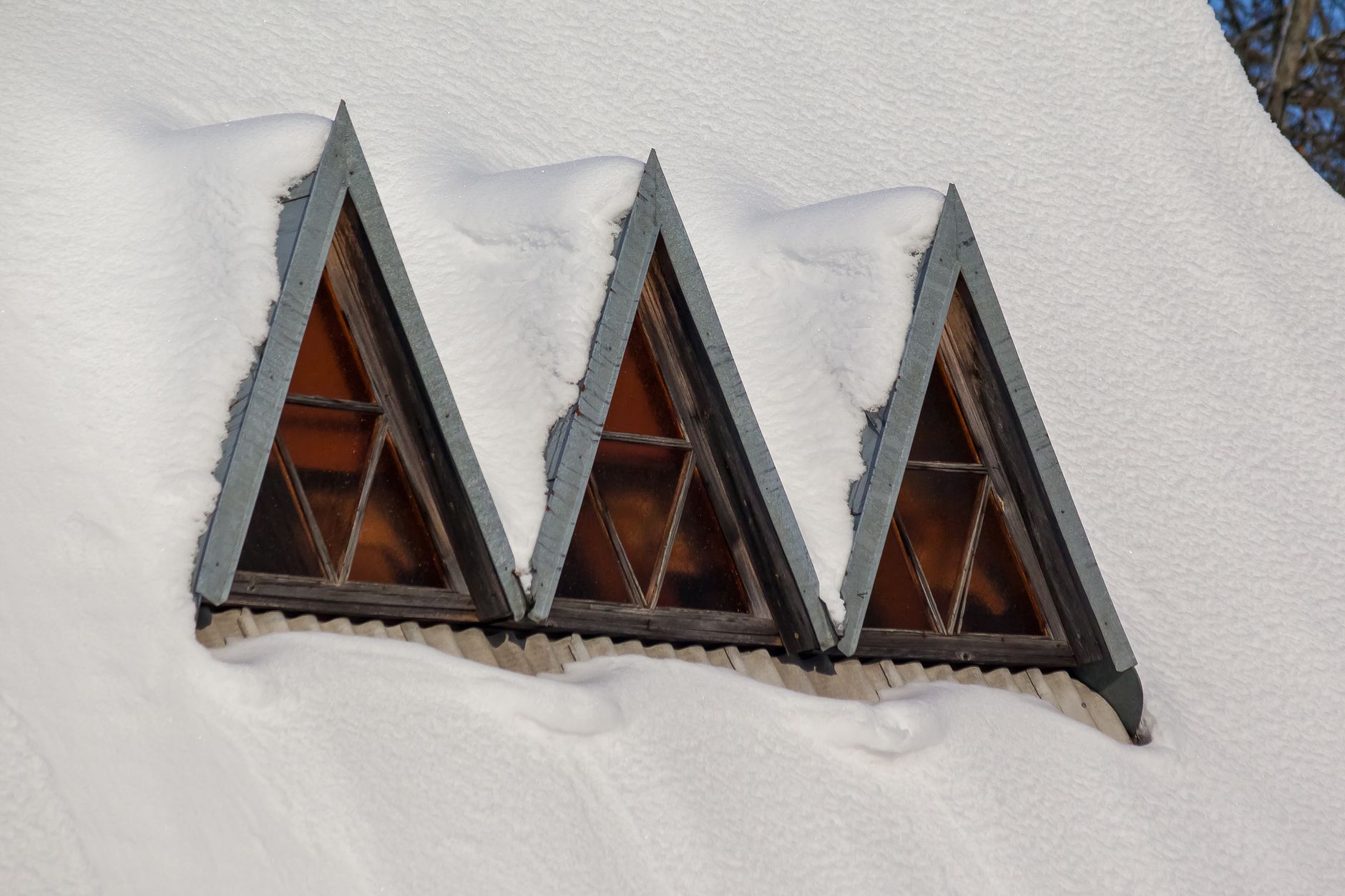
A chimney is the most-repaired part of most Summit County roofs. Water that runs down a steep pitch hits the uphill side of a masonry chase, piles up as ice, and works at the seams all winter. The flashing — that bent sheet metal collar where the chimney meets the roof deck — is the only thing standing between snowmelt and your framing. It's also exactly where a lot of homeowners want lights.
Chimneys read as the focal point of a facade. Outlining one looks great from the street. But the hardware that makes a chimney outline hold through a February wind event is the same hardware that can put a hole in a flashing joint, and a hole there doesn't announce itself until spring. So before anyone runs a line near a roof penetration, there's a short list of things worth looking at.
Flashing is layered metal, not a solid cap
A proper chimney installation has two parts. Step flashing tucks under each course of shingle or under the panel edge on metal roofs, and counter-flashing is let into a reglet cut in the masonry, then folded down over the step flashing. Nothing is sealed shut. The system works because water is directed, not blocked.
Drive a screw through counter-flashing and you've created a path that runs downhill with gravity on its side. Lift the counter-flashing to tuck a clip underneath and you've broken the overlap. At 9,000 feet, where that joint sits under compacted snow from Thanksgiving to April, both mistakes get expensive.
On standing-seam metal roofs — common across Breckenridge, Silverthorne, and newer Frisco builds — the chimney curb and the cricket behind it are usually fabricated from the same panel stock. There is no shingle to slip a clip under, and the surface is sloped, slick, and designed to shed everything. Adhesive is not an answer either; the panel expands and contracts enough through a Summit County day-night swing that tape and glue let go by December.
What gets checked before a clip goes on
Walking a roof before install, here's what matters around any penetration:
- Condition of the counter-flashing. If it's lifted, rusted at the reglet, or caulked rather than let into the masonry, it's already fragile. We stay off it entirely and light the chimney a different way, or skip it.
- Where the cricket is. The small ridged structure behind an uphill chimney face diverts snow. It's also where ice builds deepest. Anything run across a cricket gets buried and loaded.
- Snow retention hardware. Snow fences, cleats, and bars above a chimney tell you where the roof already expects accumulation to sit. Lights above and below that line live very different lives.
- Vent stacks and furnace flues. Boiler and water heater vents put out warm, wet exhaust. A light string draped across one is sitting in a freeze-thaw cycle on repeat, and on high-efficiency side-wall vents the condensate is acidic.
- Skylights and solar. Both have their own flashing kits, and both have warranty language that penetrations tend to void. Lights route around, not across.
- Drip edge and fascia access. Often the right answer is to come off the roof plane entirely and attach at the gutter line or fascia, where clips are designed to go.
Wind exposure decides the attachment interval
A chimney is a vertical obstruction in moving air. Wind coming over a ridge accelerates around it and creates lift on anything hanging there. Properties up on Dillon's exposed lakeside benches, ridgeline lots above Silverthorne, and the open approaches at Copper Mountain see gusts that will peel a loosely-spaced run off a chase in a single night.
Near a chimney, attachment points tighten up and the line gets tensioned rather than swagged. Slack is what catches wind. A run that looks fine in a 40-degree October afternoon is a different object in a 15-degree January gale with rime on it.
Better ways to light a chimney than drilling it
Most of the time we don't fasten to flashing at all. Options that hold without touching the waterproofing:
- Masonry clips on the brick or stone face, above the flashing line, in mortar joints rather than the units themselves.
- Ridge and rake outline that frames the chimney instead of wrapping it — the visual effect from the road is close to identical.
- Ground-level wash on the chase for stone chimneys with real texture, which reads better in photos than an outline does anyway.
- Bracketed standoffs on a non-flashed face, where the chase has a stucco or siding surface rather than metal.
Second-home owners and property managers should hear one more thing: if your roof had ice dam work done last spring, say so during the walkthrough. Repaired flashing is often freshly sealed and not fully cured in the way old flashing is, and the repair contractor's warranty may have conditions about what gets attached nearby. We'd rather design around it in September than find out in April.
Book the roof walk before the snow arrives
All of this requires standing on the roof in daylight with the surface dry. That window closes fast. By mid-November, Summit County loses usable light before 5 p.m., and a dusting on a metal pitch ends the inspection for the day. Homes that get designed in September and early October get a careful look at every penetration. Homes that call in December get whatever can be done safely from a ladder.
The crew behind Summit Mountain Lights has been hanging lights for more than fifteen years, and the chimney is where that experience earns its keep. We design on-site, install with professional-grade commercial materials, service the display through the season, and take it down in January. You don't touch a ladder, and your flashing stays the way the roofer left it.
Tell us your address and roughly how many feet of roofline you're thinking about, and we'll put together a free estimate.