
Local Expertise
Frozen Ground Beats Light Stakes by Mid-November
October 6, 2026
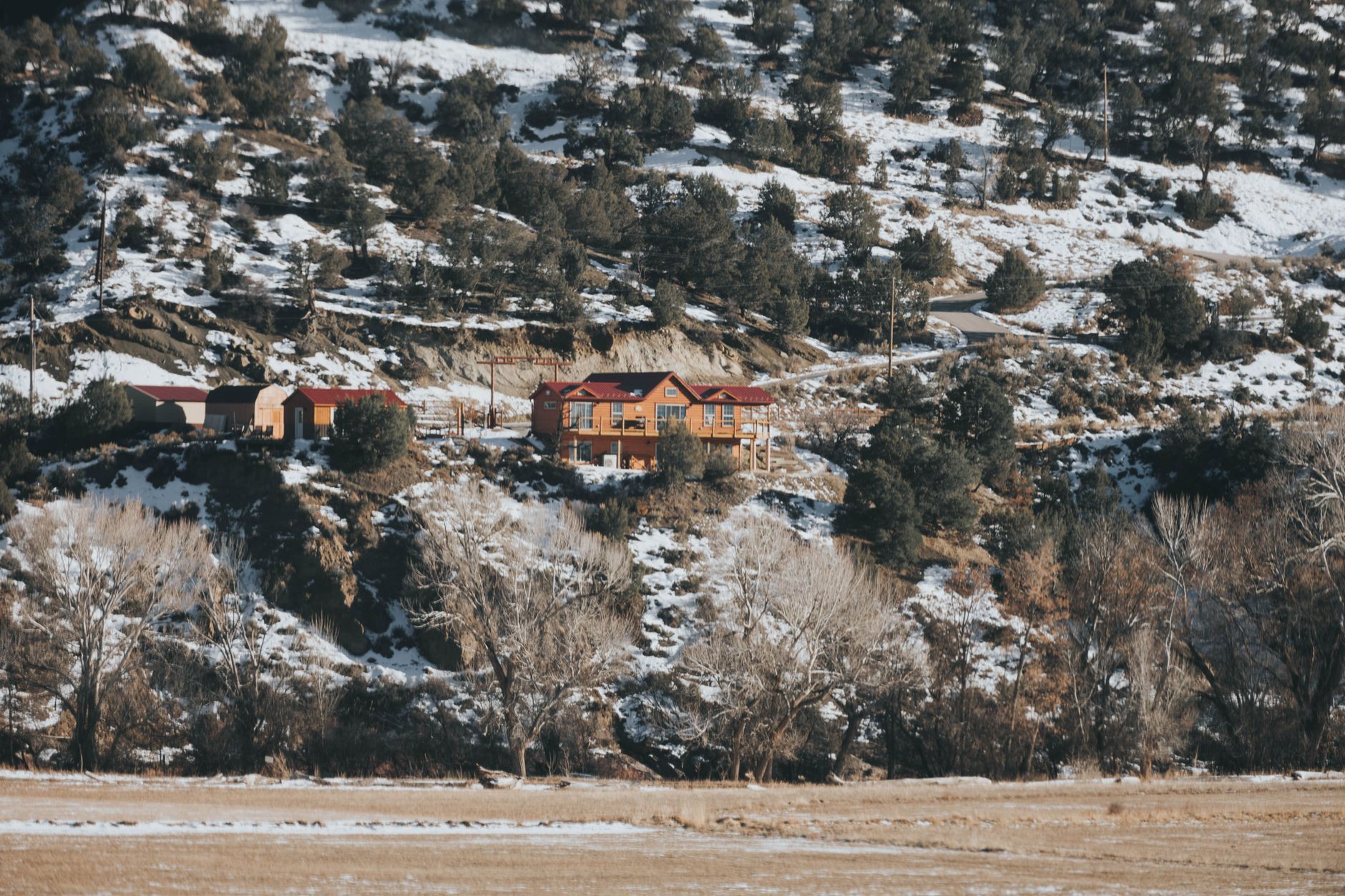
Walk a yard in Frisco on November 12 and push a plastic light stake into the lawn. If you're lucky it goes in two inches and stops. If you're not, the spike snaps off at the shoulder and you're left holding a short piece of plastic with a bulb clip on it. That's not a defective product. That's frozen ground, and in Summit County it arrives earlier than most people plan for.
This matters because pathway lighting, ground-staked C9 runs along a driveway, and the uplights at the base of a spruce are usually the last things a homeowner installs and the first things to fail. The roofline goes up in October on a warm afternoon. The ground work gets pushed to the week before Thanksgiving, which in this county is exactly the wrong week.
Soil at 9,000 feet freezes before the snow arrives to insulate it
Snowpack is an insulator. Once a foot of snow settles over a lawn, it slows heat loss from the soil underneath. The problem is the gap: the stretch of late October and early November when overnight lows in Frisco and Silverthorne are running well below freezing but there's no durable snow cover yet. Bare soil radiates heat straight to a clear high-altitude sky. The top three to six inches set up like a brick.
Breckenridge sits around 9,600 feet. Copper Mountain is 9,712. Silverthorne is lower at roughly 8,700 and Dillon is similar, but none of that is low enough to buy you much. North-facing yards and anything shaded by lodgepole stay frozen all day once they go. South-facing lawns in Frisco might thaw an inch by two in the afternoon, which is just enough to let a stake sit loosely before refreezing overnight and heaving it right back out.
That freeze-thaw heave is the second failure mode and it's sneakier than the first. The stake goes in on a warm Saturday. Moisture in the soil expands as it refreezes and lifts the stake a quarter inch at a time. Two weeks later the pathway line is leaning, bulbs are touching snow, and the whole run looks like it was installed by somebody in a hurry.
Cold makes the plastic brittle before the ground even stops it
Most consumer light stakes are injection-molded polypropylene or a low-grade PVC. At 50 degrees they flex. At five degrees they shatter. Hit a buried rock — and Summit County soil is full of glacial cobble, especially anywhere near the Blue River corridor or the Dillon Reservoir shoreline — and the stake doesn't deflect around it, it breaks.
Same physics that kills consumer light strings up here. Sub-zero cycling, night after night, works the plasticizers out of cheap vinyl and the insulation goes stiff and cracks at the socket. A stake is the same story on a shorter timeline because it's also taking mechanical load from wind and shoveling.
Wind finishes what the frost started
A staked run of C9 along a walkway is a sail. Lakeside properties in Dillon and anything on an exposed ridge above Silverthorne take gusts that will walk a loosely seated stake out of its hole in one night. We tighten attachment intervals on roofline work for the same reason — the standard spacing you'd use on a Front Range ranch house is not enough at this elevation with this exposure.
Then there's the snowplow and the shovel. Pathway stakes sit at exactly ankle height, exactly where a plow berm lands and exactly where a shovel blade sweeps. A stake in frozen ground has no give. It doesn't bend out of the way — it snaps, and now there's a live socket under a snowbank.
What holds instead
The fix is to stop relying on the soil for structure. A few approaches that work in this county:
- Install the ground elements first, not last. Reverse the usual order. Pathway stakes, tree-base runs, and anything that needs soil penetration go in during the first dry window in October while the ground still takes a stake. Rooflines can wait — a steep metal roof doesn't care what month it is, as long as the surface is dry and clear.
- Set anchors above grade. Weighted bases, sandbagged stands, and anchoring to existing hardscape — deck framing, stone walls, planter boxes, retaining wall caps — take the frozen soil out of the equation entirely.
- Wrap, don't stake. Tree trunks and aspen clusters hold lighting better wrapped and tensioned than lit from a ground-staked uplight that heaves by December.
- Move the line out of the plow path. If the driveway edge gets bermed, the lighting belongs on the far side of the berm line or up off the ground on a structure.
- Use commercial-grade stakes where a stake is unavoidable. Heavier-gauge material with a longer shank, driven deeper while the soil still allows it, with the clip oriented so a shovel glances rather than catches.
The install window is shorter than the calendar suggests
Homeowners here tend to think of the season as running through early December. In practice, usable install days end a lot sooner. Daylight is gone by 4:40 in late November, which cuts a crew's workable hours hard. Add the first real storm — which can land anywhere from late October to Thanksgiving — and the dry-ground window closes without warning.
For second-home owners and short-term rental managers, this is a scheduling problem more than a product problem. If your property books Thanksgiving week and the lights need to be live before guests arrive, the ground work has to happen weeks earlier than you'd think. Booking in September or early October is what makes that possible.
We design on-site, which means we're looking at your actual soil, your actual plow path, and your actual wind exposure before we decide what anchors where. Tell us your address and roughly how many feet you're thinking about, and we'll put together a free estimate.