
Local Expertise
Ice Dams and Christmas Lights: Install Planning
October 22, 2026
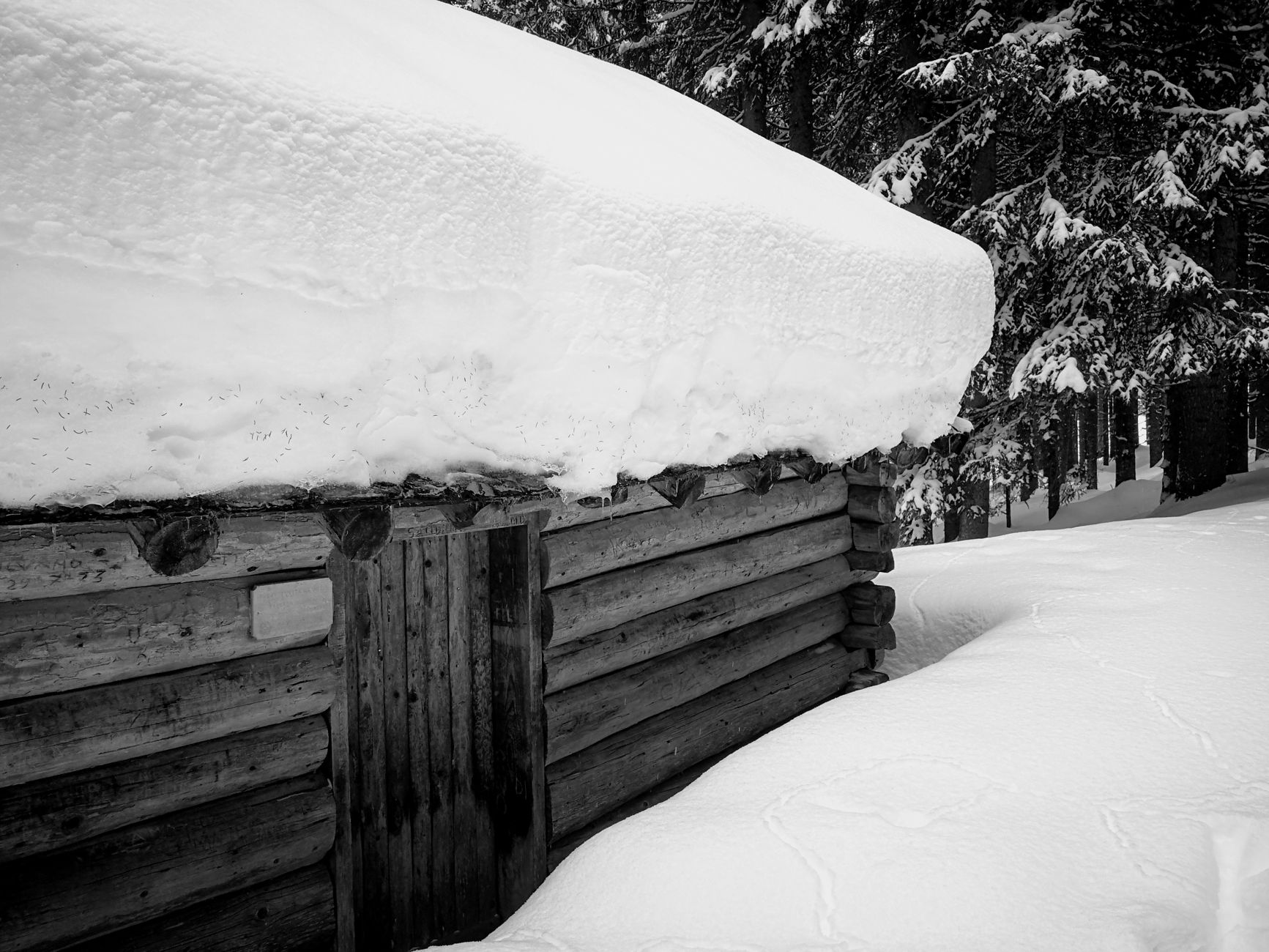
A string of lights frozen into four inches of eave ice is not a lighting problem. It's a roof problem that happened to catch your lights on the way down. By mid-January, when the ice finally lets go, the clips are gone, the socket housings are cracked, and the strand has been pulled out of plumb by the weight of something that formed above it in December.
This happens across Summit County every winter, and it's predictable enough that you can design around it in September. The decisions that determine whether your display survives February are made on install day — where the line runs, what holds it, and how much slack sits in it.
Ice dams form at the eave because that's where the roof gets cold again
The mechanism is straightforward. Heat escaping through the roof deck — from a conditioned attic, from a vaulted ceiling with thin insulation, from recessed cans punched through the air barrier — warms the snowpack sitting on the upper field of the roof. That snow melts from underneath. The water runs down the deck until it crosses the wall line and reaches the eave overhang, which has no heated space beneath it and is sitting at whatever the outside air is doing. In Breckenridge in January, that's often well below zero overnight.
The water refreezes there. The next day's melt runs down, hits the ridge of ice already built, and freezes behind it. The dam grows uphill. Water backs up behind it, finds its way under shingles or into the seam of a metal panel, and the ice spreads out over the gutter and the fascia.
Which is exactly where Christmas lights live. The standard C9 roofline run sits on the shingle tab or the gutter lip at the eave. A dam doesn't gently cover the strand — it grows around it, encases it, and then slides, taking clips, gutter hangers, and sometimes the gutter itself.
Summit County builds ice dams better than almost anywhere
Elevation is part of it. Silverthorne sits around 8,700 feet, Frisco just over 9,000, Breckenridge near 9,600, Copper Mountain at 9,712. Snow that falls here in November is frequently still on the roof in March. There's no mid-winter thaw to clear it off.
The bigger factor is the daily freeze-thaw cycle. Sun at this elevation is intense even at 15 degrees. A south-facing pitch in Dillon can be actively melting at 11 a.m. and hard-frozen by 4 p.m. — a daily cycle, not an occasional event. Each cycle adds a layer to the dam.
Then there's the housing stock. Steep pitches shed snow in slabs rather than melting gradually. Deep overhangs put a lot of unheated roof below the wall line. Older cabins and 1970s and '80s condo buildings around Keystone and Dillon were built before current insulation and ventilation standards. Add a metal roof, and you get fast, clean slides that drag anything attached to the panel with them.
What an installer can control, and what we can't
We are not roofers. We can't fix your attic ventilation or add insulation at the eave, and any lighting company that tells you their clips prevent ice dams is selling you something. What we can do is place the display so the dam forms without destroying it, and so a technician can reach the failed section in January without a chisel.
A few things we think through on a Summit County roof:
- Read the roof before quoting. Staining on the fascia, bent gutter hangers, a ragged line of old clip fragments at the eave — those tell us where ice formed last year. That edge gets different treatment.
- Move the line up the slope where it makes sense. Running the strand a few inches above the gutter lip, on the shingle field rather than the eave edge, puts it above the worst of the ice shelf without changing how the display reads from the street.
- Use standoff hardware on standing-seam metal. Nothing adhesive, nothing penetrating. Seam clamps grip the vertical rib and hold through a slide load better than anything stuck to a panel face. On a metal roof, we're often better off lighting the fascia, the ridge beam, or the deck railing instead of the roof plane.
- Leave the right amount of slack. Too tight and ice movement snaps the strand or rips the clip. Too loose and wind — meaningful on ridge lots above Silverthorne and on the exposed lakeside parcels at Dillon — whips the line against the fascia all season.
- Tighten the attachment interval on exposed elevations. More clips, closer together, on the windward side. It costs install time and saves a service call in December.
- Keep gutters out of the structural plan. A gutter loaded with ice is a falling object. Anything whose only support is that gutter is going down with it.
- Use commercial-grade strands and sealed connections. Consumer light strings go brittle in sub-zero cycling. Socket housings crack, copper fractures at the crimp, and one dead socket takes the run down.
September and October are when this gets decided
You can't do this work properly on a roof that already has snow on it. Once there's accumulation, we can't read last year's ice line, we can't safely walk the pitch to pick attachment points, and the daylight is gone by 4:30. The short install window in Summit County is not a sales tactic — it's a weather fact that compresses every October and November.
Booking a design walk now means someone stands on your property while the roof is still bare, looks at the eave, the pitch, the exposure, and the gutter line, and builds the plan around what that specific house does in January. Second-home and short-term rental owners get the added benefit of scheduling the install against a booking calendar instead of a storm.
Tell us your address and roughly how many feet of roofline you're thinking about, and we'll put together a free estimate.