
Timing & Booking
October vs. November Installs in Summit County
September 9, 2026
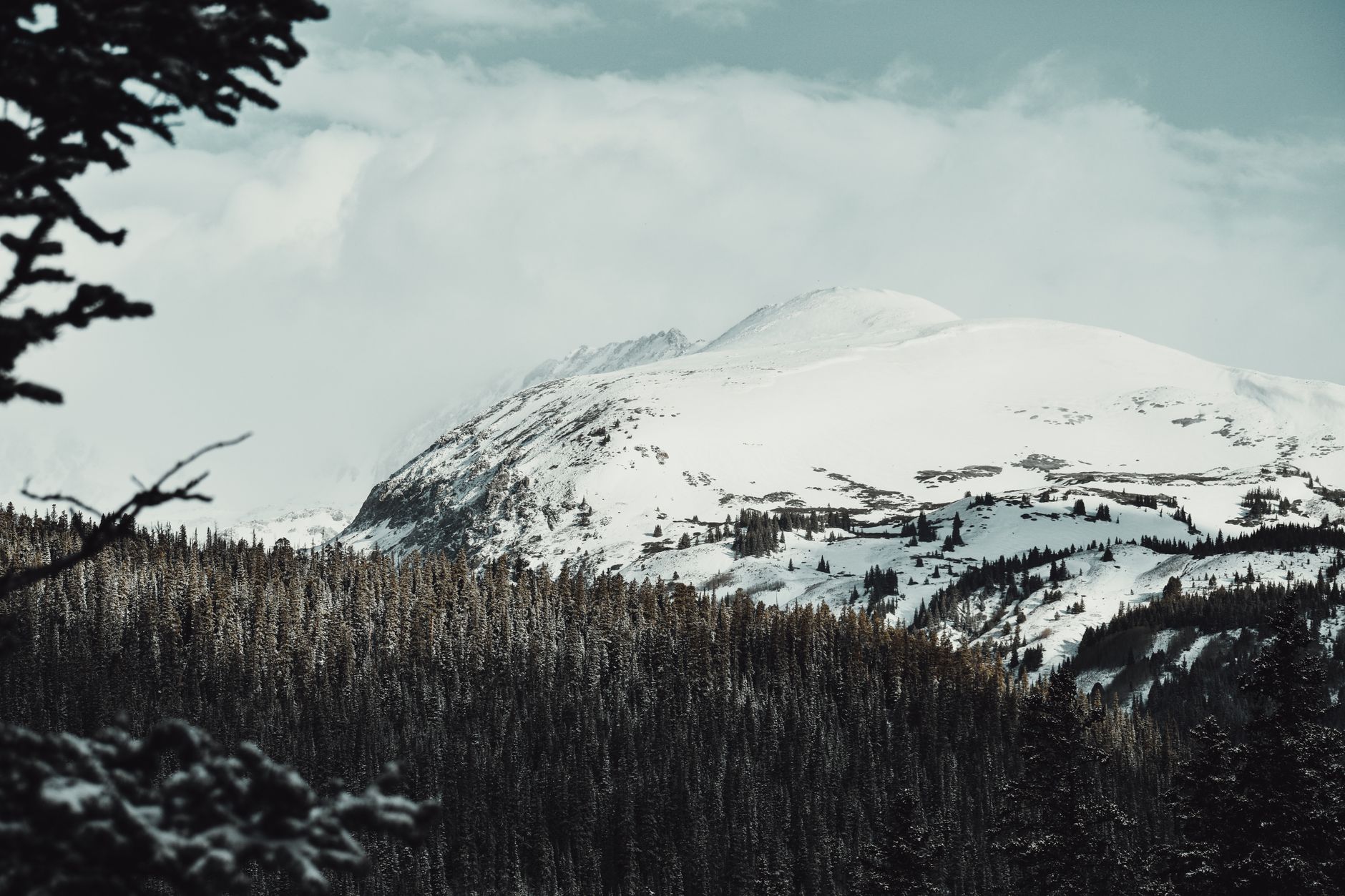
The first measurable snow in Summit County usually shows up in October. Not the storm that stays — the one that dusts the Tenmile Range, melts off the south-facing pitches by noon, and reminds everyone that the season is not theoretical. By mid-November, snow on a north-facing roof in Breckenridge stops melting at all. It sits there until spring.
That single fact is the difference between an October install and a November one. It is not about beating a rush. It is about whether a crew is clipping lights to dry shingles in daylight or chipping a work path across a frozen standing-seam roof at 9,600 feet.
Daylight disappears faster than the calendar suggests
Frisco loses roughly two and a half hours of daylight between October 1 and November 15. That number understates the problem in a valley ringed by peaks. Once the sun drops behind the ridge west of Dillon Reservoir, usable working light is gone well before the official sunset time. A crew that had a full nine-hour day in early October is working seven, and the last hour of it is marginal for anything happening above the gutter line.
Shorter days compress the schedule for everyone. A house that takes a crew most of a day in October takes a day and a half in mid-November, which means fewer homes get finished per week, which means the calendar tightens from both ends at once. Booking in October is not just claiming a slot. It is claiming a slot on a day that still has enough hours in it.
Dry roofs let us use the right attachment method
Summit County roofs are not forgiving. Standing-seam metal is everywhere in Silverthorne and on newer Breckenridge builds, and it rules out adhesive clips and anything that penetrates the panel. The correct approach is a seam-mounted clamp sized to the profile — which requires a crew member to be on the roof, hands on the metal, reading the seam.
That work is straightforward on a dry October panel. On a November panel with a rime of frost on it, metal roofing becomes one of the least safe surfaces in the trade. The same is true for the steep asphalt pitches common in older Frisco and Dillon neighborhoods. Snow does not have to be deep to be a problem; a quarter inch of refrozen melt is enough to change what a crew can safely reach.
Booking early means the design gets installed the way it was drawn — full roofline, ridge to eave, the peak the house was built to show off. Later bookings sometimes mean scaling a display back to what can be reached from a ladder, which is not the same house lit.
What snow load and wind do to a display installed in a hurry
A display in Summit County lives under accumulation for three or four months. Snow slides off a metal roof in slabs, and a run of lights attached with too much slack gets dragged with it. Ice dams build at the eave on shaded north sides and freeze clips in place until January. Lakeside properties around Dillon and ridge lots above Keystone take wind that will work a loose strand off its clip in a single night.
None of that is a reason to avoid lighting a mountain house. It is a reason to install with tighter attachment intervals, to route runs above the expected ice line, and to leave the right amount of tension in a strand. That work takes time and takes visibility. It is the first thing that gets rushed when a crew is racing a forecast, and rushed attachment is what produces the dark section on December 20th.
What October booking gets a second-home owner specifically
A large share of Summit County homes are second homes and short-term rentals, which adds a scheduling layer most homeowners do not have. If a Copper Mountain or Keystone unit has bookings starting Thanksgiving week, the install has to land before the first guest arrives — and it has to be finished, not half-done with a crew returning after the holiday.
An October site visit also solves the access question while it is easy. We can walk the property, confirm where power is, check whether the exterior outlets are switched or on a timer, and find out whether the HOA in that development has rules on color, timing, or roofline placement. Sorting that out in October is a phone call. Sorting it out in late November, with a storm on the way and an owner three states away, is a lost week.
What a November booking actually looks like
We still install in November. Most of our installs happen in November. The point is not that November is a bad month — it is that November scheduling is weather-dependent in a way October scheduling is not. When a storm parks over the county for three days, every job behind it shifts, and the jobs booked last shift the furthest.
If you book in October, your install is scheduled with slack built in. If you book in mid-November, your install is scheduled against whatever the sky is doing that week. Both can end with a beautifully lit house. Only one lets you know the date in advance.
What to do this month
Three things move an October booking along quickly:
- Know your rough footage. The linear feet of roofline you want lit — front elevation only, or wrapping the sides — is the single biggest driver of the design.
- Check your HOA covenants now. Some Summit County developments restrict install start dates or color palettes. Better to know before we design.
- Confirm exterior power. Where the outlets are, and whether they are on a switch inside the house, decides how the display is controlled.
Bring us the address and roughly how many feet you want lit, and we'll come look at the roof while it is still dry. Get a free estimate.