
Commercial & HOA
Surge Protection for Commercial Light Displays
October 30, 2026
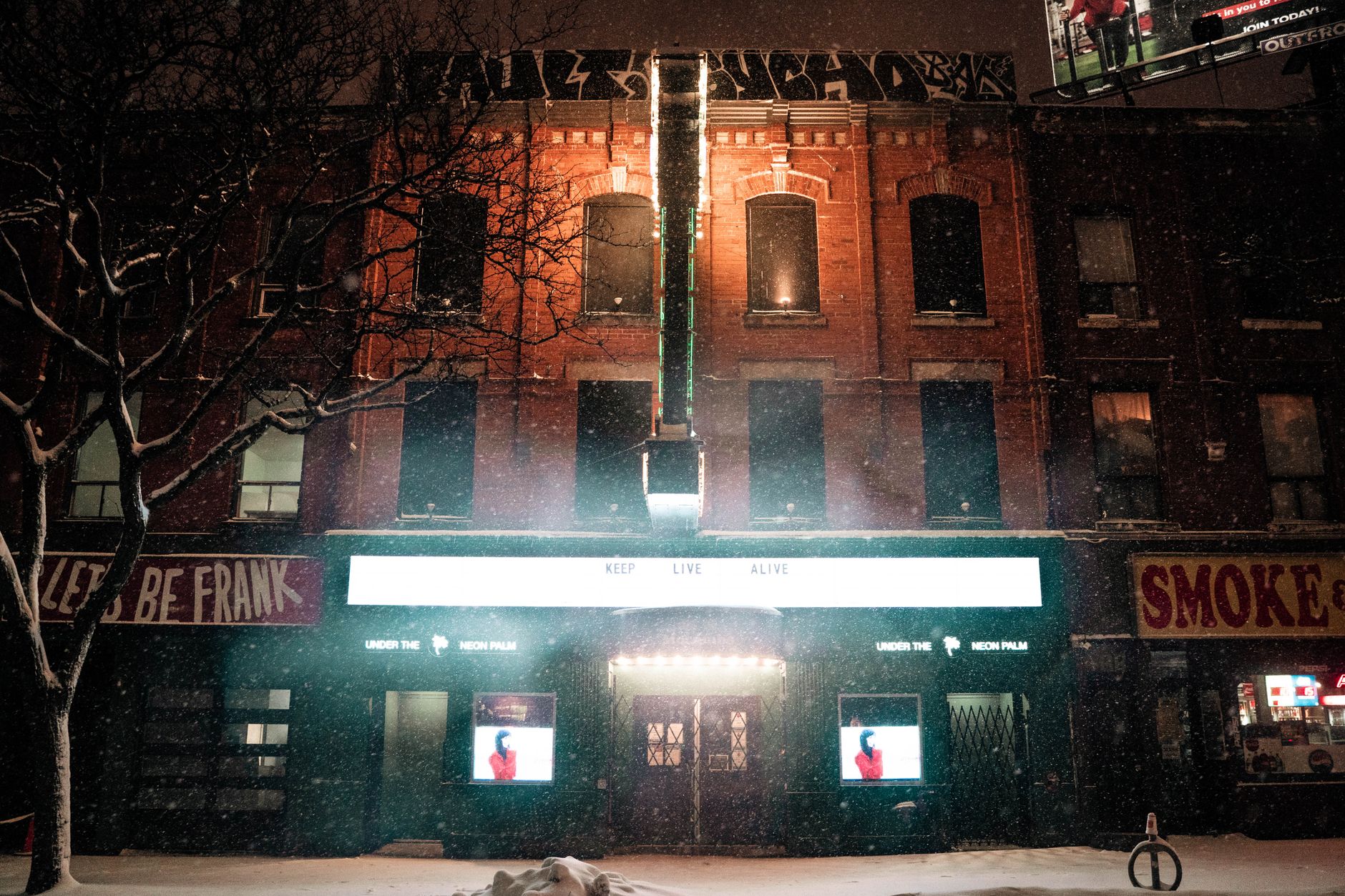
A hotel display in Dillon goes dark at 5:40 p.m. on a Friday. The lights were fine the night before. Nobody touched anything. The front desk calls the property manager, the property manager calls whoever hung them, and everyone starts guessing. Nine times out of ten the guess is "a bulb burned out." Often the real answer sits in the outlet: a tripped GFCI, a cooked power supply on an LED run, or a controller that took a voltage spike and never came back.
Commercial displays in Summit County run under electrical conditions that are harder than most people account for. Long cord runs across parking lots. Outdoor receptacles exposed to blowing snow. Mountain utility feeds that see more disturbance than a city grid. And summer storms that roll through the high country with enough lightning activity to put transients on lines that still have holiday hardware connected months later. Planning for that in September costs very little. Discovering it in December costs a dark building during your busiest booking weeks.
Mountain power is noisier than flatland power
Summit County sits at the end of long transmission and distribution runs that cross exposed terrain. Wind loads trees against lines, snow loading brings branches down, and lightning finds high ground — which, between Frisco at 9,097 feet and Copper Mountain at 9,712, is most of the county. Utility crews do their job well, but the practical result for a business is more brief interruptions, more blinks, and more voltage transients than a property owner on the Front Range would see in a season.
A blink you barely notice in the lobby lights is enough to upset the switching power supply driving a few hundred feet of LED. Those supplies are electronics. They do not like inrush, they do not like transients, and they definitely do not like both at once on a 10-degree morning when every circuit in the building fires back up after a momentary outage.
Lightning deserves its own note. Most people associate it with July afternoons, which is correct — Summit County's storm season is summer, not December. The relevance to a holiday display is what happens to permanently mounted hardware. Properties that keep year-round roofline track, outdoor receptacles, or buried conduit for site lighting can carry surge damage from August into November without anyone knowing, because nothing was plugged in to reveal it. That's one reason a pre-install electrical check in September matters more here than it does at lower elevation.
What actually fails, in order
When a commercial display goes down in Summit County, the cause is usually one of four things, and surge is involved in two of them:
- GFCI nuisance trips. Moisture gets into a connection, the device sees leakage current, and it does exactly what it's supposed to. Long parallel runs of outdoor cord in wet snow raise cumulative leakage even when nothing is broken.
- Power supply failure. The transient from a blink or a switching event kills the driver. The LED strings are fine; the thing feeding them is not.
- Controller lockup. Timers, photocells, and any controller with a microprocessor can latch into a bad state after a disturbance and stay dark until someone cycles power at the panel.
- Mechanical damage. Snow sliding off a standing-seam roof can take a run of C9s with it, pulling a connection apart at the eave.
Only that last one is visible from the ground. The other three look identical: a dark section, no obvious cause, a property manager on the phone in the dark at 5:40.
Three layers of protection worth specifying
Protecting a commercial display is not one product. It's a stack, and each layer handles a different failure mode.
Panel-level surge protection. A whole-building surge protective device installed at the service panel by a licensed electrician clamps the large transients before they reach anything. This is the layer that protects HVAC, POS systems, and the lighting circuits together. If a property already has one, confirm its status indicator still reads green — SPDs degrade after absorbing events and many sit dead for years without anyone checking.
Circuit-level protection at the receptacle. Weather-resistant surge-protected outdoor power strips and in-use covers keep the rest out. The in-use cover ("bubble cover") matters as much as the surge rating here, because moisture intrusion drives the GFCI trips that get blamed on surge anyway.
Load planning. The cheapest surge protection is not overloading circuits in the first place. LED holiday lighting draws a fraction of what incandescent did, which tempts people to daisy-chain far more than they should. Spreading a display across more circuits reduces inrush on any one of them and means a single failure takes down one elevation of the building instead of all four.
What a property manager can do before November
None of this requires a degree. It requires a walk around the building with a notepad in the next few weeks:
- Locate and test every exterior receptacle you plan to use. Press test, press reset, confirm it holds.
- Check that every outdoor receptacle has an in-use cover that closes with a cord plugged in.
- Find out whether the building has a panel surge protective device and whether its indicator is still green.
- Note which exterior circuits are shared with anything you can't afford to trip — walkway heat, security cameras, snowmelt controls.
- Identify where a timer or controller lives, and whether anyone on staff can reach it in a storm without a ladder.
- Decide who gets the call when a section goes dark, and make sure that person has a phone number that answers in December.
Do this before the first heavy snow. Once accumulation sits on a flat commercial roof or piles against a service door, access to the hardware you need gets complicated fast, and daylight for diagnosing anything outdoors runs out around 4:30.
Design around failure, not just around looks
When we design a commercial display in Frisco, Breckenridge, Silverthorne, Dillon, Keystone or Copper Mountain, circuit layout gets decided at the same time as the design itself. Professional-grade LED strings, sealed connections rated for sub-zero cycling, surge-protected outdoor taps, and runs split across enough circuits that one failure doesn't take the whole building. We service what we install through the season, so when something does go down — and in this climate, occasionally something does — the fix is a scheduled visit, not a guessing game.
Tell us the property, the elevation, and roughly how many feet of roofline and landscape you're lighting, and we'll put together an estimate.