
Timing & Booking
Why First Snow Pushes November Light Installs Back
October 5, 2026
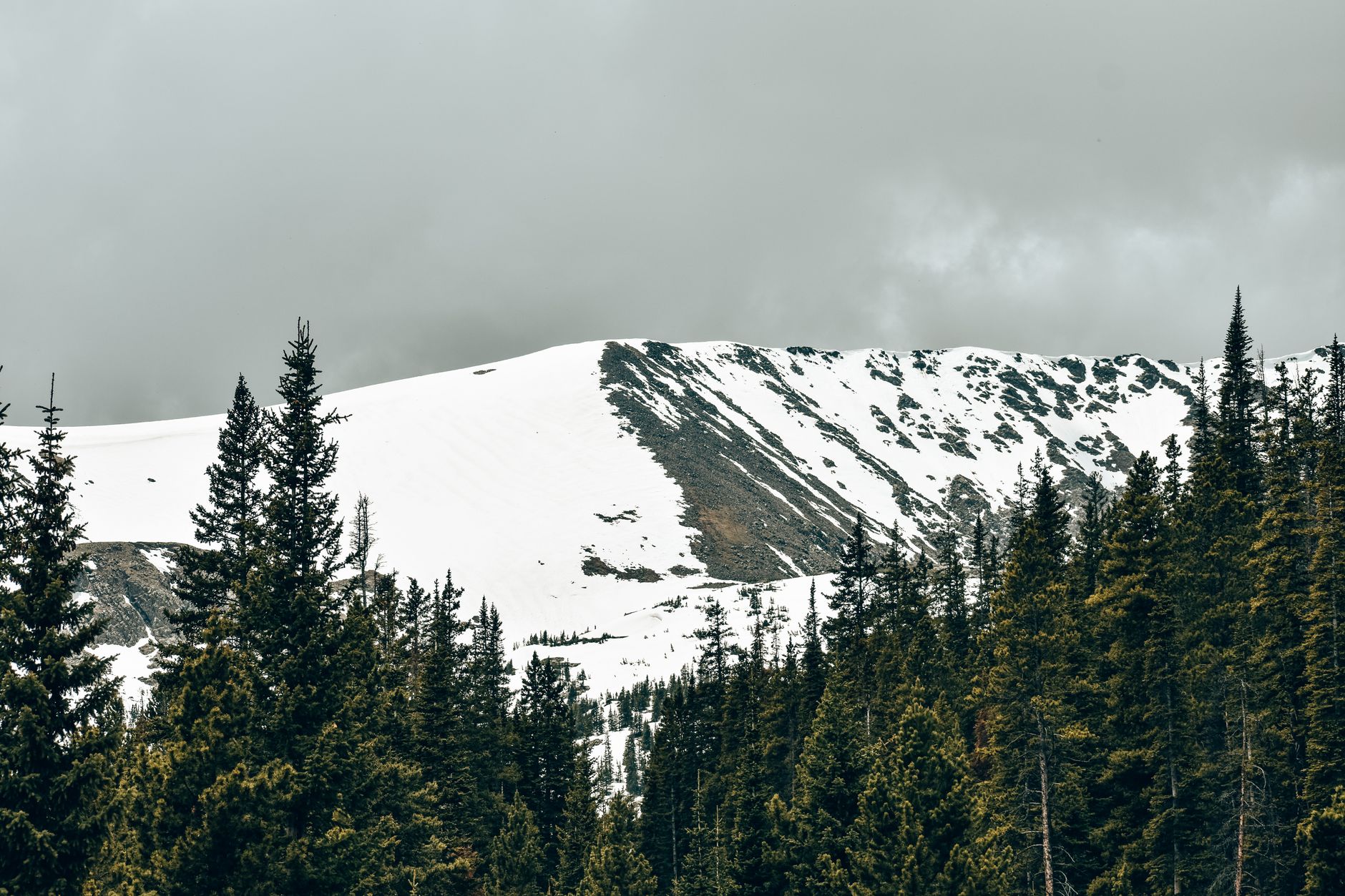
Snow falls on Summit County in October. Not a dusting that burns off by ten in the morning — real accumulation that sits on a north-facing roof in Breckenridge and never fully leaves until April. Frisco sits at 9,097 feet. Copper Mountain tops out at 9,712. Up here, the question isn't whether snow interrupts the install season. It's whether your display is already hung when it arrives.
That's the whole argument for booking by mid-October. Not urgency for its own sake. A crew standing on a dry roof works differently than a crew standing on a wet one, and the calendar between those two conditions is short.
A dry roof and a snow-covered roof are two different jobs
Most Summit County homes have steep pitches — 8:12, 10:12, steeper — built to shed snow fast. Plenty of them are standing-seam metal. On a clear, dry October afternoon, that metal is a predictable surface. Our crew works it with seam clips and a rope system, no adhesive, no screws, nothing that penetrates the panel or voids a roof warranty.
Add a half inch of snow and a layer of ice underneath, and the same roof becomes something you can't safely stage a full day's work on. Metal under snowmelt is slick in a way asphalt shingle isn't. The snow has to be cleared from the work path before anything gets hung, and clearing it from a 10:12 metal pitch takes real time — time that was supposed to go toward your install.
So a job that was a single day in dry conditions becomes a day and a half. Multiply that across a November schedule and every house behind you slides.
November daylight runs out faster than people expect
By mid-November, usable daylight in Summit County runs roughly from 7 a.m. to 4:30 p.m. Subtract the time it takes for frost to clear off a north-facing roof in the morning — often not until nine or ten — and the real working window on a cold week is about six hours.
Six hours is enough for a straightforward roofline. It is not enough for a two-story home in Silverthorne with dormers, a wrapped entry, and a stand of spruce out front. Those jobs need two days, and two short days in November are harder to find than two long days in October.
Crews here don't lose hours to weather alone. They lose them to the sun going down behind the Tenmile Range at four in the afternoon.
Wind closes the roof before snow does
Lakeside properties around Dillon catch wind off the reservoir with nothing to break it. Ridge lots above Silverthorne and the exposed sides of Keystone get the same treatment. A 40 mph gust doesn't just make ladder work uncomfortable — it makes it something a responsible crew won't do.
Those days get called off, usually the morning of. One windy Tuesday in November moves four jobs. Two windy days in the same week and the schedule is rebuilt from scratch, with the earliest-booked customers keeping their dates and everyone else absorbing the shift.
Wind also drives how we attach things. On exposed Dillon and ridge properties we tighten clip spacing considerably compared to a sheltered lot in a Frisco neighborhood. That takes more clips and more time per linear foot, which is another reason those homes benefit from an early slot rather than a late one.
What mid-October booking actually gets you
Booking isn't just a name on a list. It's the sequence that has to happen before a single strand goes up:
- An on-site design visit. We measure your rooflines, look at the roof material and pitch, find the power, and figure out where the runs go. This happens in person, not from a satellite photo.
- Materials cut and built for your house. Commercial-grade strands get measured and assembled to your specific roofline, with the right clip type for your roof edge. Nothing comes out of a box off a shelf.
- A real install date. Early bookings get placed first, which means they get the dates with the most daylight and the lowest odds of weather conflict.
Homes that book in mid-October typically get installed in the first half of November, before the ground is frozen hard and before the first storm that sticks. Homes that call the week of Thanksgiving get what's left, and what's left is the short, cold, unpredictable end of the season.
Second homes and rentals need the earliest dates of all
If you own a place in Keystone or Copper and you're not here in November, your install has to happen without you. That's standard for us — we design from the on-site visit, install while you're down the hill, and send photos when it's lit. But it only works smoothly when the date is locked well in advance.
Short-term rental owners have a harder constraint: the display should be up before the first holiday booking checks in, not three days after. Thanksgiving week guests arriving to a dark house is a review problem you can't fix retroactively. Property managers running multiple units should be scheduling all of them together in October, not calling each one in separately in November.
Book now, and you don't think about it again
Our crew has been hanging lights for more than fifteen years, and the pattern doesn't change: the people who call in October have lit houses by mid-November and never think about it again. The people who call after the first storm are competing for a handful of short days against everyone else who waited.
We're based in Frisco. We design on-site, install with professional-grade materials, service the display through the season, and take it down in January. You don't touch a ladder, and you don't climb onto a snow-covered metal roof in December to chase a dark section.
Tell us your address and roughly how many feet of roofline you're thinking about, and we'll get you a free estimate and a date on the October calendar.